
Network Camera: The Smart Solution for Modern Surveillance Systems

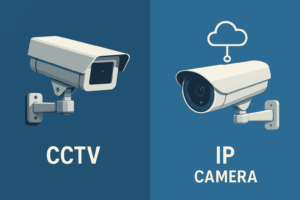
A network camera, also known as an IP camera, is a digital video device that transmits data over a network such as the Internet or a local area network (LAN). Unlike traditional CCTV systems that use analog signals and coaxial cables, these cameras utilize digital protocols to capture and transfer video data. This innovation has transformed surveillance technology by combining high-quality imaging, remote access, and intelligent monitoring features.
Overview
Modern surveillance relies heavily on network-based imaging devices. Each unit integrates a lens, image sensor, processor, and network interface in a single housing. Once connected, the video feed is encoded and sent directly to a network video recorder (NVR), cloud storage, or connected mobile device.
Users can access real-time footage or playback recordings securely from anywhere using internet-enabled devices. Because of their scalability and flexibility, IP camera systems have become a preferred choice for both home and business security applications.
How Network Cameras Work
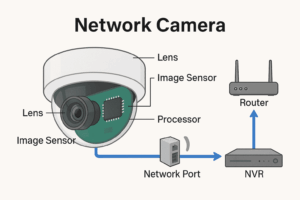
A typical device functions as a self-contained surveillance unit that connects directly to a network. It includes the following components:
-
Lens and Image Sensor – Capture and convert light into digital signals.
-
Processor and Encoder – Compress video using formats such as H.264 or H.265.
-
Network Interface – Allows communication through Ethernet or Wi-Fi.
-
Firmware and Software – Handle video management, motion detection, and user access.
Once powered, the camera captures and compresses footage before transmitting it securely to viewing or recording systems. For more details about recording equipment, see our DVR CCTV System Explained article.
Types of Network Cameras
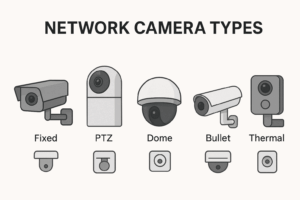
Several types of IP-based surveillance devices are available to suit different environments:
-
Fixed Cameras – Provide continuous coverage of a single location.
-
PTZ (Pan-Tilt-Zoom) Cameras – Offer adjustable viewing angles and optical zoom functions.
-
Dome Models – Compact and vandal-resistant, ideal for indoor or public settings.
-
Bullet Cameras – Cylindrical and weatherproof, designed for outdoor use.
-
Thermal and Panoramic Cameras – Detect heat signatures or provide a 360° field of view.
Each type fulfills a specific role, ensuring optimal visibility for every surveillance scenario.
Advantages of IP-Based Surveillance Cameras
Digital surveillance cameras offer several advantages compared to analog CCTV systems:
-
High-Resolution Imaging – Capture crisp, detailed visuals up to 4K quality.
-
Remote Access – View live feeds and recorded footage from any connected device.
-
Scalability – Expand your system easily by adding more units through the network.
-
Smart Analytics – Enable AI-driven motion detection, facial recognition, and event alerts.
-
Cost Efficiency – Fewer cables and simplified setup reduce installation and maintenance costs.
These features make IP camera systems a smart choice for modern security needs.
Applications
Network-based cameras are widely used across multiple industries and environments:
-
Residential Properties – Allow homeowners to monitor premises remotely.
-
Commercial Offices and Retail – Enhance security and customer safety.
-
Industrial Facilities – Track operations and maintain workplace safety.
-
Public Infrastructure – Support city surveillance and traffic monitoring initiatives.
To understand how viewing equipment supports these systems, read our CCTV Monitor Buying Guide.
Installation and Configuration
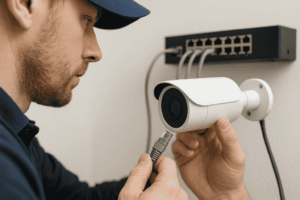
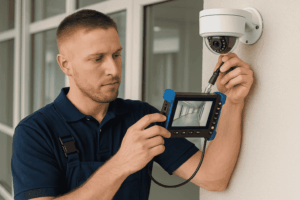
Installing a digital surveillance camera involves connecting it to a network and configuring the necessary settings:
-
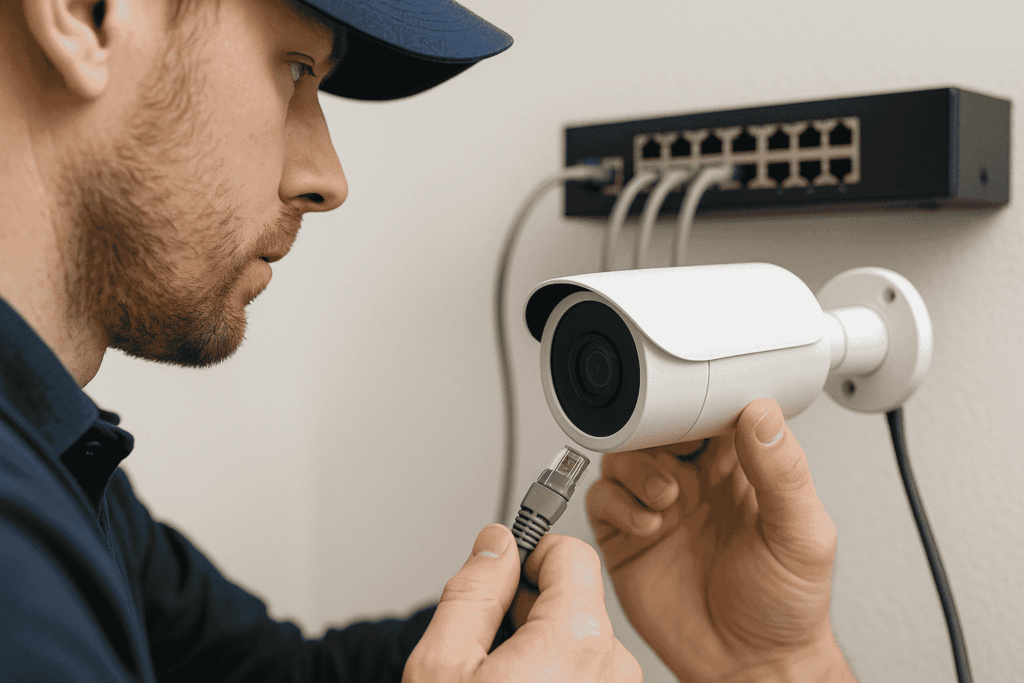
Connect the camera via Ethernet or Wi-Fi.
-
Power it through Power over Ethernet (PoE) or an external adapter.
-
Configure network and IP settings using software or an NVR.
-
Access the live stream via browser or mobile app.
For setup and safety tips, refer to our CCTV Power Supply Guide.
Need help selecting the right connection type? See our CCTV Camera Cable Comparison.
Network Security and Data Protection
Because these cameras operate online, cybersecurity is critical. Follow these steps to protect your data:
-
Use strong passwords and unique administrator accounts.
-
Enable encryption (SSL/TLS) for secure data transmission.
-
Keep firmware and software updated regularly.
-
Employ firewalls and IP filtering to limit access.
Maintaining security protocols helps prevent unauthorized access and ensures reliable operation of your system.
Future Trends in Surveillance Technology
The evolution of IP-based surveillance continues to advance rapidly:
-
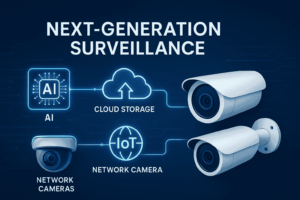
Artificial Intelligence (AI) enables intelligent video analytics and threat detection.
-
Cloud Storage Solutions simplify remote management and archiving.
-
4K and 8K Video Resolutions enhance detail and visual clarity.
-
IoT Integration connects cameras to smart homes and building management systems.
These innovations are shaping a new era of intelligent, connected security systems.
Conclusion
Network-based surveillance systems represent the next step in digital security. Combining high-resolution video, intelligent analytics, and remote access, they deliver efficient, flexible, and reliable monitoring solutions.
For expert installation or consultation on network camera systems and advanced surveillance technologies, visit AllTechSolutions — your trusted partner for modern security and networking solutions.