
Introduction
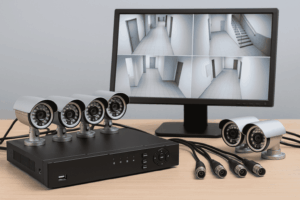
A Digital Video Recorder CCTV setup remains one of the most trusted and reliable surveillance solutions for homes and businesses. It allows users to record, store, and review footage from analog security cameras, offering a strong balance between cost and performance.
Even in the age of IP-based systems, the DVR security system continues to serve as a backbone for effective CCTV recording.
What Is a Digital Video Recorder?
A digital video recorder (DVR) is a device that converts analog signals from cameras into digital format, allowing footage to be stored on a hard drive.
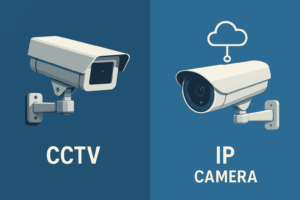
Unlike Network Video Recorders (NVRs) that rely on IP cameras, DVRs are designed for analog camera systems, transmitting video via coaxial cables. This ensures reliable performance and wide compatibility across traditional setups.
How a DVR System Works
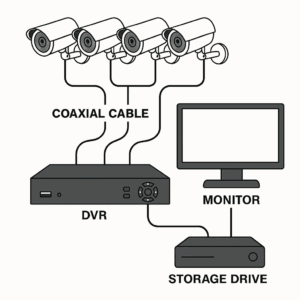
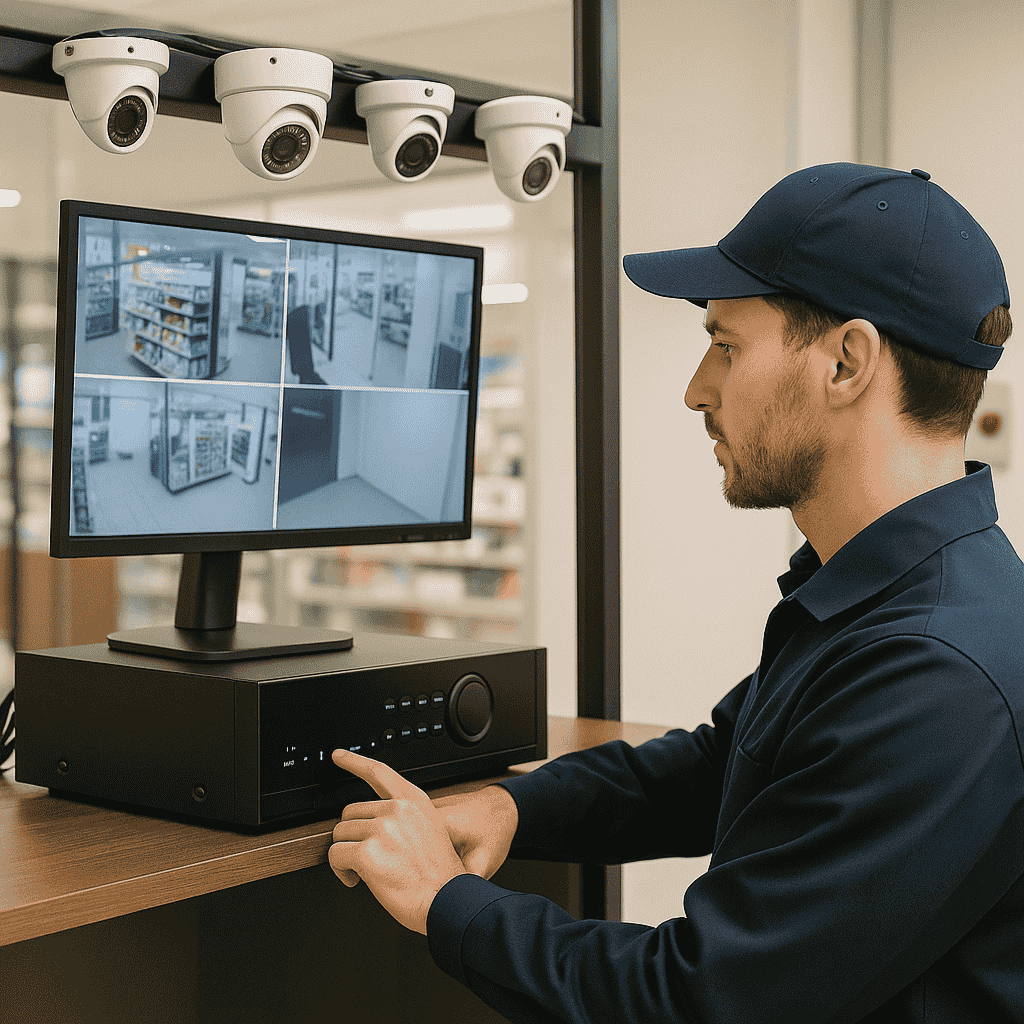
A DVR surveillance setup connects several analog security cameras through coaxial cables to a central recording unit. The DVR processes and compresses the video and saves it for easy playback or remote viewing.
-
Camera Capture – Analog cameras record footage and send signals to the DVR.
-
Digital Conversion – The DVR encodes and stores footage on a local drive.
-
Video Surveillance Storage – Securely saves recorded data.
-
Monitor Display – Displays live or previously recorded video.
-
Remote CCTV Monitoring – Enables viewing through mobile apps or browsers.
Main Components of a DVR CCTV System
| Component | Description |
|---|---|
| Analog Cameras | Capture and send footage to the recorder. |
| Coaxial Cables | Transmit video between cameras and DVR. |
| CCTV DVR Recorder | Converts analog signals into digital format. |
| Storage Drive | Stores the video surveillance footage. |
| Monitor | Displays live and playback views. |
| Network Access | Enables remote CCTV monitoring. |
Key Features of Modern DVR Systems
-
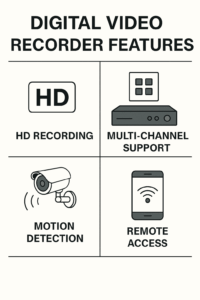
High-Definition Recording – Captures footage in 1080p or higher.
-
Multi-Channel Input – Supports 4, 8, 16, or more cameras.
-
Motion Detection & Alerts – Records automatically upon detecting movement.
-
Efficient Compression – Uses H.265 for space-saving video surveillance storage.
-
Remote Access – Provides real-time monitoring from mobile or desktop apps.
Types of DVRs
| Type | Description | Ideal Use |
|---|---|---|
| Standalone DVR | All-in-one, easy-to-use unit | Homes, small offices |
| PC-Based DVR | Runs through a computer system | Large or multi-site setups |
| Hybrid DVR | Supports both analog and IP cameras | Businesses upgrading systems |
Advantages of DVR-Based CCTV Systems
-
Reliable Performance: Provides stable CCTV recording and playback.
-
Cost-Effective: Affordable compared to IP or cloud-based setups.
-
Ease of Use: Simple wiring and setup process.
-
Compatibility: Works with a wide range of analog security cameras.
-
Expandable: Allows adding more channels and storage capacity.
DVR vs. NVR Systems
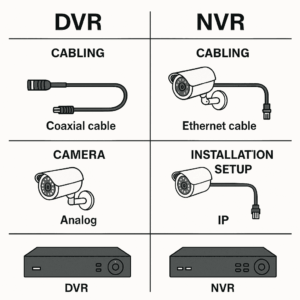
| Feature | DVR | NVR |
|---|---|---|
| Camera Type | Analog cameras | IP Cameras |
| Connection | Coaxial Cables | Ethernet Cables |
| Video Processing | Inside the DVR | Inside the camera |
| Storage | Local hard drive | Local or cloud |
| Access | Remote CCTV monitoring | Network-based access |
While both serve similar purposes, DVRs are preferred for budget-friendly and reliable security recording, making them ideal for small to medium installations.
Applications of DVR Security Systems
-
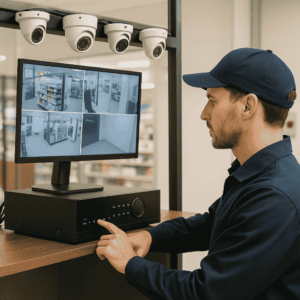
Residential Properties – For consistent home surveillance.
-
Retail Stores – To prevent theft and monitor customer activity.
-
Corporate Offices – For secure access control and documentation.
-
Warehouses – For 24/7 video surveillance storage.
-
Public Institutions – To maintain safety and compliance.
The Future of DVR Technology
As security technology evolves, the CCTV DVR recorder continues to advance with features like AI motion detection, hybrid camera support, and cloud backups.
These upgrades ensure that digital video recorder systems remain relevant for users seeking dependable, long-term video protection.
Related Topics (Internal Linking Suggestions)
When publishing on AllTechSolutions.us, link these topics to existing or upcoming blogs:
Conclusion
The Digital Video Recorder CCTV remains a cornerstone of modern surveillance.
With reliable video storage, seamless remote monitoring, and compatibility with analog security cameras, it provides an affordable and durable solution for homeowners and business owners seeking peace of mind.
A DVR security system continues to prove that strong, simple technology can deliver professional-grade protection.