
5 Game-Changing Differences Between CCTV and Surveillance Systems for Modern Security
Introduction
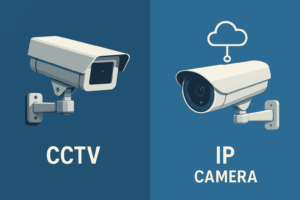
Security technology continues to evolve rapidly, yet many people still confuse CCTV with surveillance systems. Although both aim to protect people and property, there are important differences between CCTV and surveillance that affect how they work, their capabilities, and the level of security they offer.
Understanding these distinctions can help you choose the right system for your home or business. In this article, we’ll break down the five game-changing differences that separate a CCTV system vs surveillance system — helping you make smarter, more secure decisions.
1. Connectivity and Network Structure
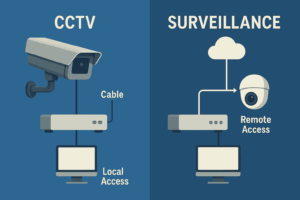
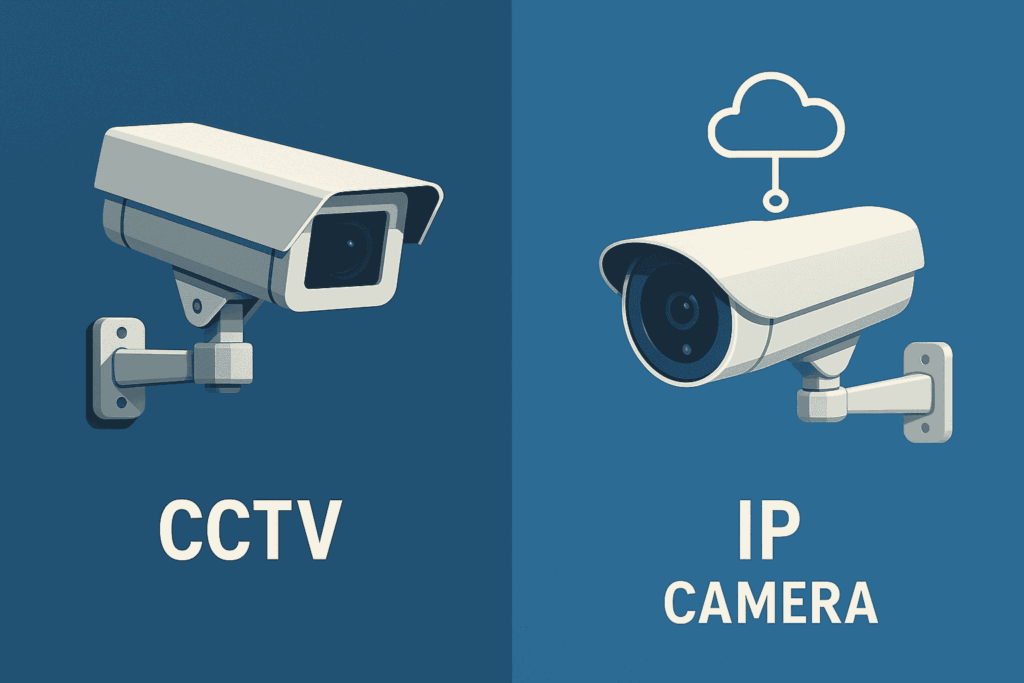
CCTV (Closed-Circuit Television) operates through a closed network, transmitting video via cables to a Digital Video Recorder (DVR) and local monitors. It’s designed for on-site viewing only, meaning you can’t access footage remotely without special equipment.
In contrast, surveillance systems utilize IP-based technology, which connects through local networks or the cloud. This allows for remote monitoring, multi-site access, and real-time video management from your smartphone or computer.
To see how different components connect, check our post on Understanding CCTV Components.
2. Technology Used: Analog vs Digital
One of the most significant differences between CCTV and surveillance systems lies in the camera technology.
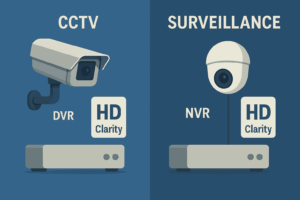
CCTV systems rely on analog cameras, which transmit standard-definition signals through coaxial cables to a DVR.
Surveillance systems, however, use digital IP cameras that send data instantly over a network — offering HD or 4K resolution, enhanced zoom, and night vision.
This analog vs digital security cameras distinction defines image quality and performance in modern monitoring.
You can explore more about camera types in our related guides:
3. Monitoring and Accessibility
Traditional CCTV systems provide local-only monitoring — you can view footage directly on monitors connected to the DVR, often requiring an on-site presence.
By comparison, modern surveillance systems enable remote access and real-time viewing through apps or web dashboards. Users can control multiple cameras across locations and receive live alerts from anywhere.
This flexibility makes surveillance systems ideal for businesses managing several branches or properties.
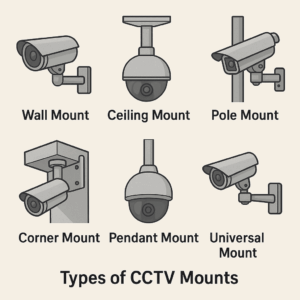
For better camera placement and setup, check our post on CCTV Mounts and Installation Techniques.
4. Data Storage and Management
Storage is another area where the differences between CCTV and surveillance systems become clear.
CCTV typically stores recordings on DVRs (Digital Video Recorders), which are local devices with limited capacity. When full, they overwrite older footage.
Surveillance systems, however, use NVRs (Network Video Recorders) or cloud-based storage. This allows for remote backups, scalability, and greater security.
The DVR vs NVR system comparison highlights how surveillance setups provide advanced data management, better accessibility, and remote playback options.
Learn more in our related blogs:
5. Intelligence and Integration
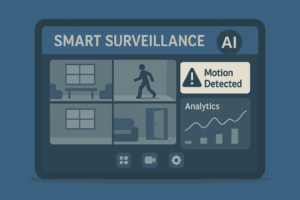
Perhaps the most game-changing difference between CCTV and surveillance systems lies in intelligence and automation.
CCTV systems are passive, recording footage for review after incidents occur.
Surveillance systems, on the other hand, are AI-powered surveillance solutions that actively analyze video in real time.
They can detect motion, recognize faces, identify license plates, and send instant alerts. Some even integrate with IoT devices, alarms, and access controls — creating a smart, connected security ecosystem.
To learn how software empowers modern security, visit our blog on CCTV Security Software: The Brain of Modern Surveillance Systems.
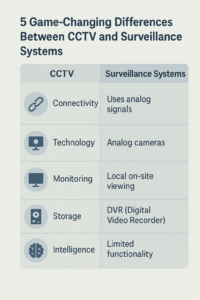
Summary Table: CCTV vs Surveillance Systems
| Feature | CCTV | Surveillance System |
|---|---|---|
| Connectivity | Closed-loop, wired | Network-based, remote access |
| Technology | Analog cameras | Digital, IP-based cameras |
| Monitoring | Local-only | Remote and real-time |
| Storage | DVR (local) | NVR or cloud storage |
| Intelligence | Passive recording | AI-powered analytics |
Which System Should You Choose?
The right system depends on your security goals:
-
CCTV systems are ideal for basic, cost-effective monitoring.
-
Surveillance systems offer smart, scalable, and AI-driven solutions for modern environments.
For many clients, a hybrid solution combining both technologies offers the perfect balance between reliability and innovation.
CCTV and Surveillance in Modern Smart Security
Today, the differences between CCTV and surveillance are narrowing as technology advances. Many businesses are upgrading from analog CCTV setups to AI-powered surveillance platforms that offer remote access and predictive monitoring.
At AllTech Solutions, we specialize in custom security solutions — from CCTV installation to full surveillance integration.
🔒 Protect smarter. Monitor better.
Contact AllTech Solutions today for professional installation, system upgrades, and modern surveillance solutions.
Frequently Asked Questions (FAQ)
1. Are CCTV and surveillance systems the same?
Not exactly. CCTV is a closed-loop video monitoring system, while surveillance includes network connectivity and AI analytics.
2. What’s the main difference between CCTV and surveillance systems?
CCTV uses analog technology for local monitoring, while surveillance systems are digital, cloud-based, and AI-enabled.
3. Can CCTV work without the internet?
Yes, traditional CCTV systems can record locally on a DVR without internet access.
4. Which is better: CCTV or surveillance?
Surveillance systems are smarter and more flexible. CCTV is simpler and cheaper for smaller applications.