
Closed-Circuit Television (CCTV): The Backbone of Modern Security Systems
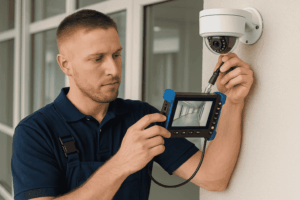
Closed-Circuit Television (CCTV) has become the backbone of modern surveillance and security technology. From protecting homes and businesses to monitoring public spaces and industrial facilities, CCTV systems play a vital role in ensuring safety, reducing crime, and enabling real-time monitoring.
Unlike traditional broadcast television, CCTV operates within a closed network, transmitting signals only to authorized monitors or recorders. With innovations in digital imaging, IP networking, and AI-driven analytics, CCTV continues to evolve as a cornerstone of intelligent security systems.
Overview of Closed-Circuit Television (CCTV) Systems
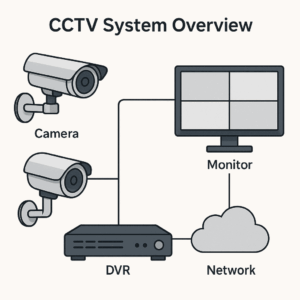
CCTV systems operate as private video networks designed to record, monitor, and store footage for authorized viewing. The “closed-circuit” nature ensures that video signals are restricted to designated devices and operators, maintaining privacy and data control.
Modern CCTV configurations often combine network video recorders (NVRs), IP cameras, and cloud-based platforms, allowing remote access and centralized management. This makes CCTV integral to both physical security and digital surveillance ecosystems.
History of Closed-Circuit Television (CCTV)
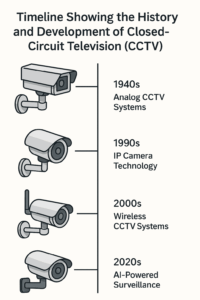
The first known CCTV system was developed in 1942 by Siemens AG to monitor rocket launches in Germany. During the 1960s, CCTV expanded into commercial and government applications, especially for bank and city surveillance.
The introduction of video cassette recorders (VCRs) in the 1970s allowed for video storage and review, a major leap for monitoring operations. In the early 2000s, the rise of digital and IP-based CCTV systems revolutionized image quality, remote viewing, and long-term storage.
Today, CCTV systems have become more intelligent and adaptive, integrating AI analytics, facial recognition, and cloud storage for predictive security management.
Main Components of a Closed-Circuit Television (CCTV) System
A CCTV system includes several key elements that work together to deliver seamless monitoring and recording.
1. Cameras
The core component of any CCTV setup.
Types include:
-
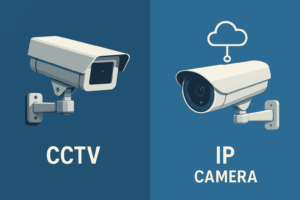
Analog Cameras – Send video signals via coaxial cables.
-
IP Cameras – Transmit digital data over a network.
-
Dome Cameras – Compact, discreet, and vandal-resistant.
-
Bullet Cameras – Long-range, suitable for outdoor use.
-
PTZ Cameras – Offer pan, tilt, and zoom functions for dynamic coverage.
2. Lenses
Control how much of a scene is captured and how detailed it appears. Options include fixed, varifocal, and motorized lenses.
3. Monitors
Display live or recorded footage for security personnel. Modern CCTV systems often use computer screens or mobile devices for remote monitoring.
4. Recorders
Used to store and manage footage:
-
DVR (Digital Video Recorder) – For analog cameras.
-
NVR (Network Video Recorder) – For IP-based systems.
-
Cloud Storage – Enables remote access and scalable archiving.
5. Cables and Networking
Transmit video and power:
-
Coaxial cables (RG59) for analog setups.
-
Ethernet cables (Cat5e/Cat6) with Power over Ethernet (PoE) for digital systems.
6. Power Supply
Ensures stable power delivery. PoE and centralized supplies simplify installation.
Types of Closed-Circuit Television (CCTV) Systems
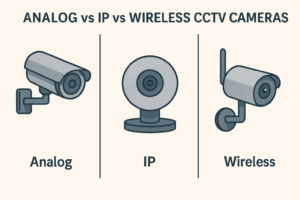
-
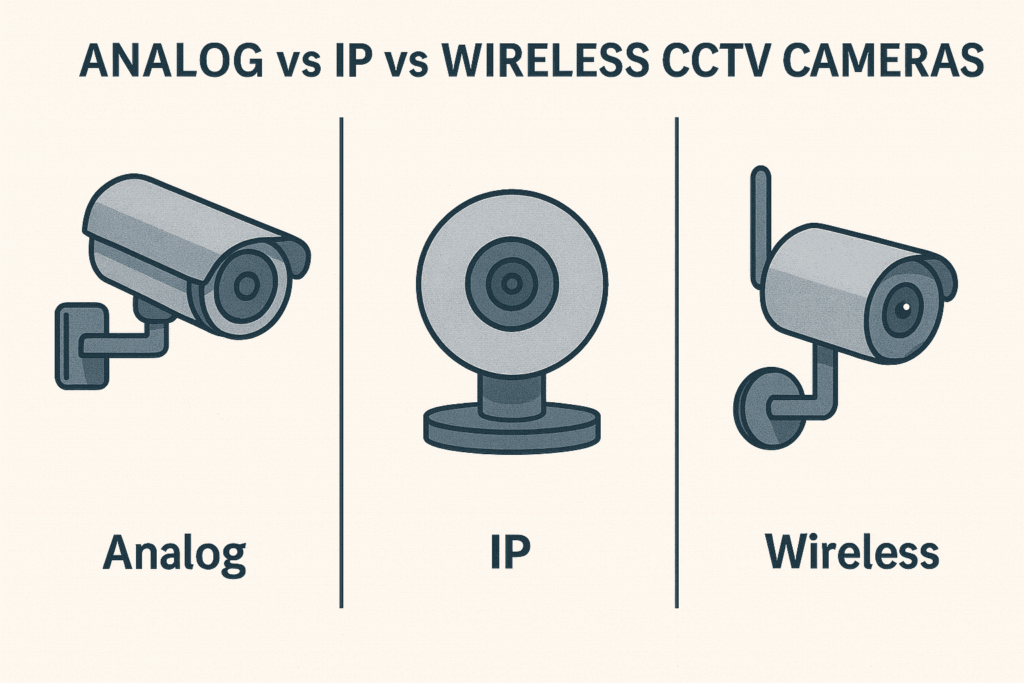
Analog CCTV Systems
Use coaxial cables and DVRs. Reliable and cost-effective, but limited in resolution. -
Digital CCTV Systems (DVR/NVR)
Convert analog video to digital format for enhanced image quality and storage. -
IP-Based CCTV Systems
Offer higher resolution, scalability, and network connectivity. Ideal for large facilities. -
Wireless CCTV Systems
Use Wi-Fi or mobile data to transmit footage, reducing installation costs and complexity.
Applications of Closed-Circuit Television (CCTV)
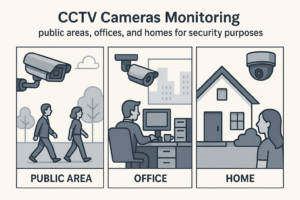
CCTV is used across various sectors to enhance safety, efficiency, and visibility:
-
Public Safety: Urban monitoring, law enforcement, and traffic control.
-
Commercial Security: Protection for banks, retail stores, and offices.
-
Industrial Use: Monitoring assembly lines, warehouses, and restricted areas.
-
Residential Security: Home surveillance, smart doorbells, and perimeter protection.
-
Transportation: Airports, railways, and public transit systems for crowd safety.
Advantages of Closed-Circuit Television (CCTV)
-
Deters criminal activity and unauthorized access.
-
Provides reliable video evidence for investigations.
-
Enables remote monitoring and rapid response.
-
Integrates with motion detection and AI analytics.
-
Enhances operational efficiency and safety compliance.
Privacy and Ethical Considerations in CCTV Surveillance
While CCTV strengthens security, it also raises privacy and ethical issues. Improper use can lead to unauthorized monitoring or data breaches.
Organizations and operators must follow data protection regulations such as GDPR and ensure transparent surveillance policies. Balancing safety with privacy is essential for responsible CCTV deployment.
Recent Technological Advancements in Closed-Circuit Television (CCTV)
CCTV technology continues to advance rapidly with:
-
Artificial Intelligence (AI) and Machine Learning: Enabling facial recognition, object detection, and automated alerts.
-
Cloud Integration: Offering scalable, secure, and remote data access.
-
4K Ultra-HD Cameras: Delivering high-resolution clarity for precise identification.
-
Thermal and Infrared Imaging: Allowing monitoring in total darkness or challenging conditions.
-
Edge Computing: Reducing bandwidth by processing data directly on the device.
Future of Closed-Circuit Television (CCTV)

The next era of CCTV focuses on smart surveillance — merging with IoT, AI, and cloud ecosystems for predictive and proactive monitoring.
Emerging trends include:
-
Integration with smart city infrastructure.
-
Enhanced cybersecurity and encryption measures.
-
AI-driven behavioral analytics for threat prevention.
-
Use of drone-based surveillance for expanded coverage.
CCTV will continue to serve as the backbone of intelligent security systems, ensuring safety and situational awareness in an increasingly connected world.