
Understanding CCTV Power Supply Systems: The Backbone of Reliable Surveillance
Introduction
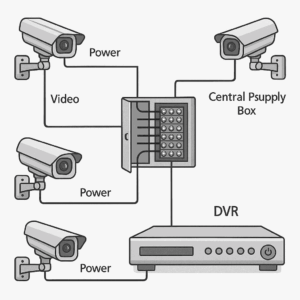
A CCTV power supply system is one of the most critical yet often overlooked components of a surveillance network. While cameras and recorders attract most of the attention, a stable and properly configured power source ensures uninterrupted operation, image stability, and system longevity. Without consistent power delivery, even the most advanced camera setup can fail to capture vital moments.
For a detailed overview of camera types and configurations, read our guide on CCTV Components Overview.
What Is a CCTV Power Supply?
A CCTV power supply provides the necessary electrical energy for surveillance cameras and related equipment. These systems convert incoming electrical current—usually from the main AC supply—into a stable, low-voltage DC or AC output suitable for cameras. Most modern CCTV cameras operate at 12V DC, though certain models may require 24V AC.
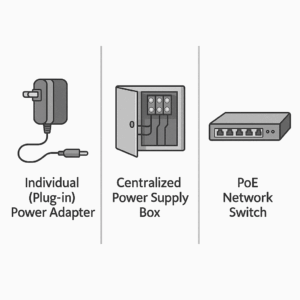
Power supplies are available in multiple configurations, ranging from individual plug-in adapters for single cameras to centralized multi-channel power boxes designed for large systems. The goal is to ensure that each camera receives adequate and stable voltage without interruptions or surges.
Types of CCTV Power Supplies
-
Individual (Plug-in) Power Adapters
These are compact adapters used for single-camera setups. They’re cost-effective and easy to install, making them common in residential CCTV systems. However, they can become impractical when managing multiple cameras. -
Centralized Power Supply Boxes
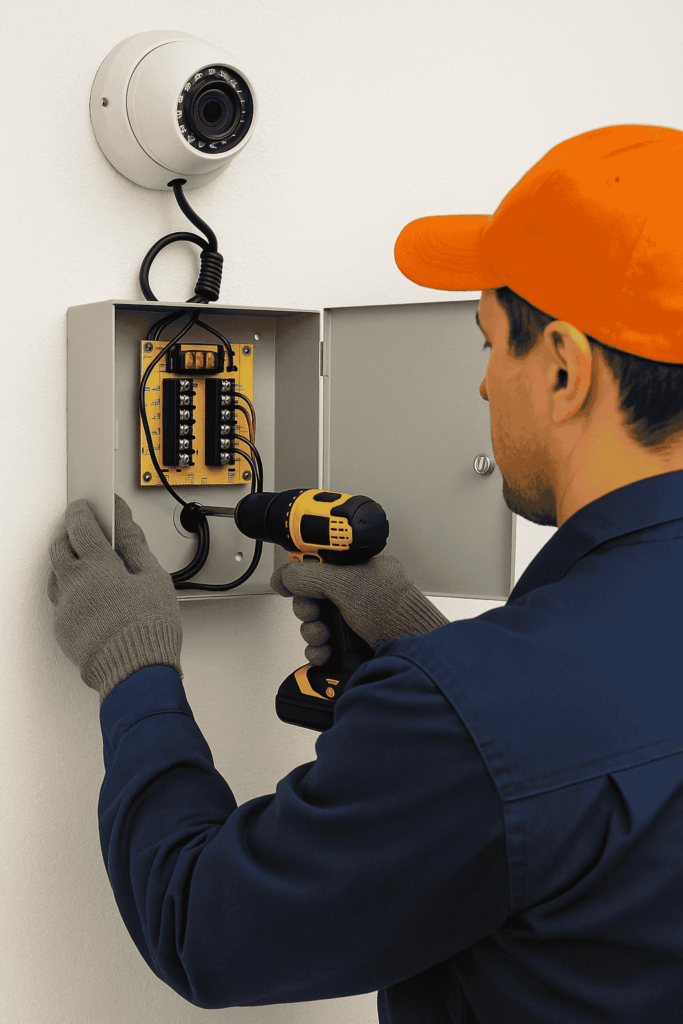
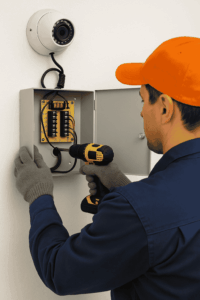
A centralized unit powers multiple cameras from a single enclosure. These boxes, often rated between 5A to 20A, simplify cable management and are commonly known as a CCTV power distribution box. -
Power over Ethernet (PoE)
PoE technology allows both power and data transmission over a single Ethernet cable. This reduces wiring complexity and is widely used in modern IP camera systems. PoE switches and injectors also feature built-in surge and overload protection, ensuring both efficiency and safety.PoE power for CCTV cameras has become a preferred choice for modern IP systems since it delivers both data and electricity through a single Ethernet cable.
For a deeper understanding of how PoE and data management relate to system performance, check out our article on Network and Storage Devices in Surveillance Systems.
Voltage and Current Considerations
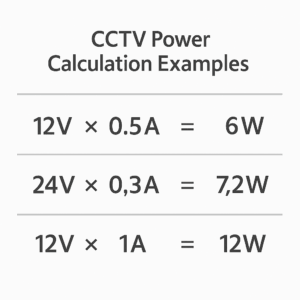
Every CCTV camera has specific power requirements. Most use 12 volts DC, and the total current (amperage) depends on the number of cameras connected. For instance, a system with four 12V cameras that each draw 500mA would require at least a 2A power supply.
Most modern cameras operate on a 12V DC CCTV power supply, which provides stable and efficient power for continuous operation.
Incorrect voltage or insufficient current can result in flickering images, system instability, or even permanent camera damage. Proper calculations and quality power sources prevent these issues and maintain consistent performance.
To understand how power conversion and stability work in computing environments, read our detailed guide on Computer Power Supply Units (PSU).
Why Reliable Power Supply Matters
A dependable CCTV power source ensures:
-
Continuous Monitoring: Prevents video loss and system downtime.
-
Equipment Protection: Safeguards cameras and DVRs from voltage spikes and electrical surges.
-
Stable Image Quality: Eliminates flickering or rolling screens caused by unstable voltage.
-
Extended Equipment Lifespan: Reduces strain on components, minimizing maintenance needs.
Surveillance systems are often installed in critical areas—banks, schools, offices, and public spaces—where power reliability directly impacts security effectiveness.
Common Power Issues and Troubleshooting
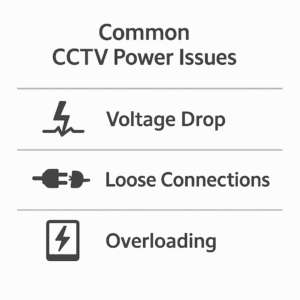
Regular CCTV power supply troubleshooting helps identify issues like voltage drops, overloading, or loose connections before they cause system failure.
-
Voltage Drop: Occurs when cables are too long or too thin. Use thicker wires or shorter runs to maintain voltage levels.
-
Overloading: Adding more cameras than the power supply can handle can cause overheating or shutdowns.
-
Loose Connections: Unsecured terminals lead to intermittent power loss and camera failure.
-
Environmental Factors: Excessive heat, moisture, or dust can damage power components over time.
If your system experiences overheating or unstable voltage, our post on Computer Cooling Systems provides helpful insights that also apply to power regulation in electronics.
Selecting the Right Power Supply
When choosing a CCTV power supply, consider:
-
Total camera load and future expansion
-
Voltage and current compatibility
-
Surge and overload protection features
-
Brand reliability and warranty coverage
Professional installation ensures proper wiring, grounding, and circuit safety. At AllTech Solutions, our technicians design and implement CCTV systems powered for stability, scalability, and long-term performance.
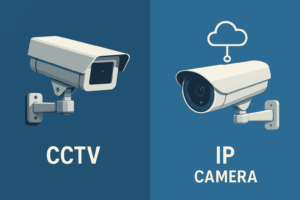
You can also explore our CCTV System Comparison Guide to see how power supply requirements vary between analog, IP, and wireless setups.
Conclusion
The CCTV power supply system serves as the foundation of reliable surveillance. From voltage regulation to power distribution, each element contributes to the overall effectiveness of your security setup. Selecting the right power supply isn’t just a technical detail—it’s a critical investment in continuous protection and operational reliability.
For expert installation or to upgrade your CCTV power system, contact AllTech Solutions — your trusted partner in security and technology integration.